What Hoboken Condo Buyers Need to Know About New Jersey's New Reserve Law
September 10, 2026
September 10, 2026
A Hoboken condo went into contract in eleven days this August. That's the median time on market for the city right now, and it means attorney review, financing, and inspection all happen on a compressed clock. Buyers used to spend that window worrying about knob-and-tube wiring or a leaky roof deck. Now there's a document that didn't exist in most Hoboken closings before 2024, and if nobody asks for it before the offer goes in, it can stall a deal that was supposed to move fast.
That document is the capital reserve study, and in some buildings, a structural engineer's inspection report to go with it. New Jersey passed a law that changes what condo associations have to prove about their own finances and their own buildings, and Hoboken's housing stock puts a larger share of local transactions squarely inside that law's reach than a generic explainer would suggest.
New Jersey's Structural Integrity and Reserve Funding law took effect January 8, 2024. It does two things. First, it requires every condominium, cooperative, and qualifying planned development to complete a capital reserve study, a professional assessment of what the building's shared components will cost to repair or replace over the next 30 years, and to fund reserves according to that study rather than leaving the decision to a volunteer board's discretion. Second, it requires a subset of buildings, called "covered buildings," to undergo periodic structural inspections by a licensed New Jersey engineer.
A covered building is defined by its primary load-bearing system: concrete, masonry, steel, or a hybrid that includes heavy timber or podium decks. Standard wood-frame single-family homes and typical townhouse projects are excluded. The law doesn't care how tall the building is or how many units it has. It cares what the frame is made of.
In August 2025, the state amended the reserve funding piece with a second bill. That amendment set a baseline standard, a 30-year funding plan that can never project the reserve balance falling below zero, and created a temporary option for associations that are behind: they can fund at 85 percent of the recommended plan for up to five fiscal years, provided they disclose it. The disclosure requirement is specific. The board's notice to unit owners must be printed in at least 20-point bold font, stating that the association elected the 85 percent option, and if applicable, the year and dollar amount of the special assessment or loan the underfunding is expected to require. If a unit sells while the association is on that 85 percent track, the seller has to hand the buyer a copy of that notice before the contract is signed.
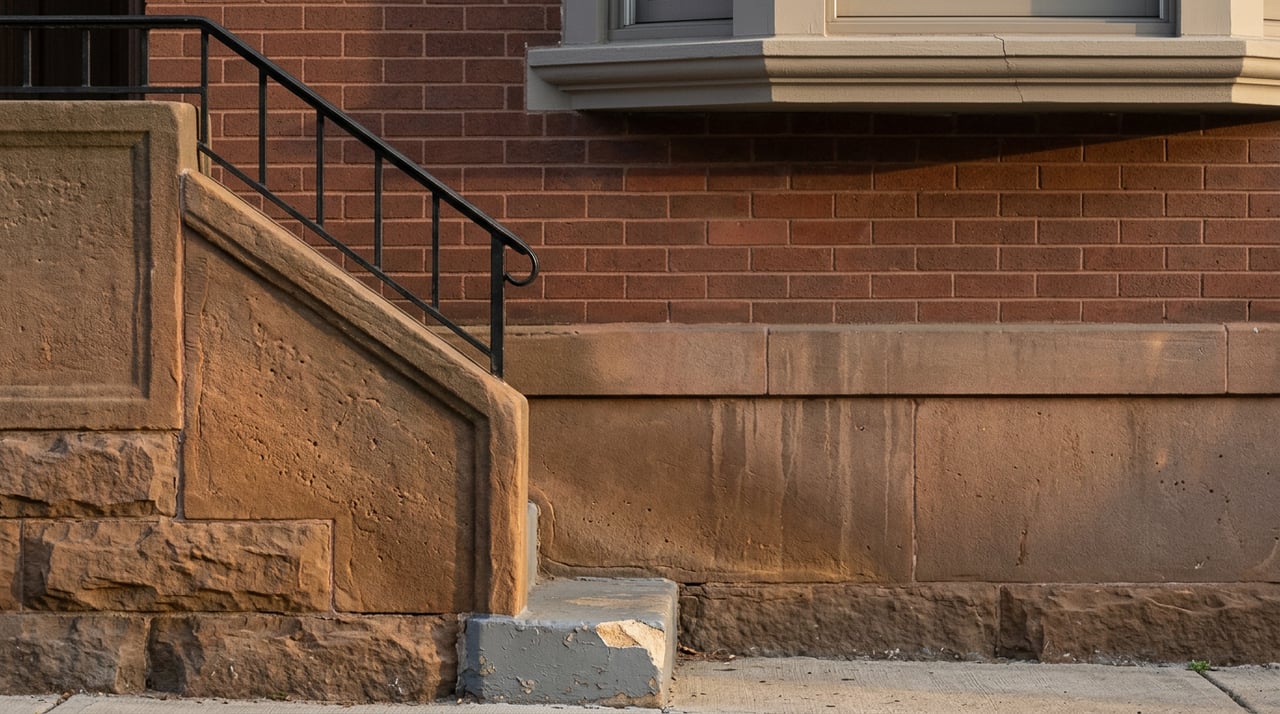
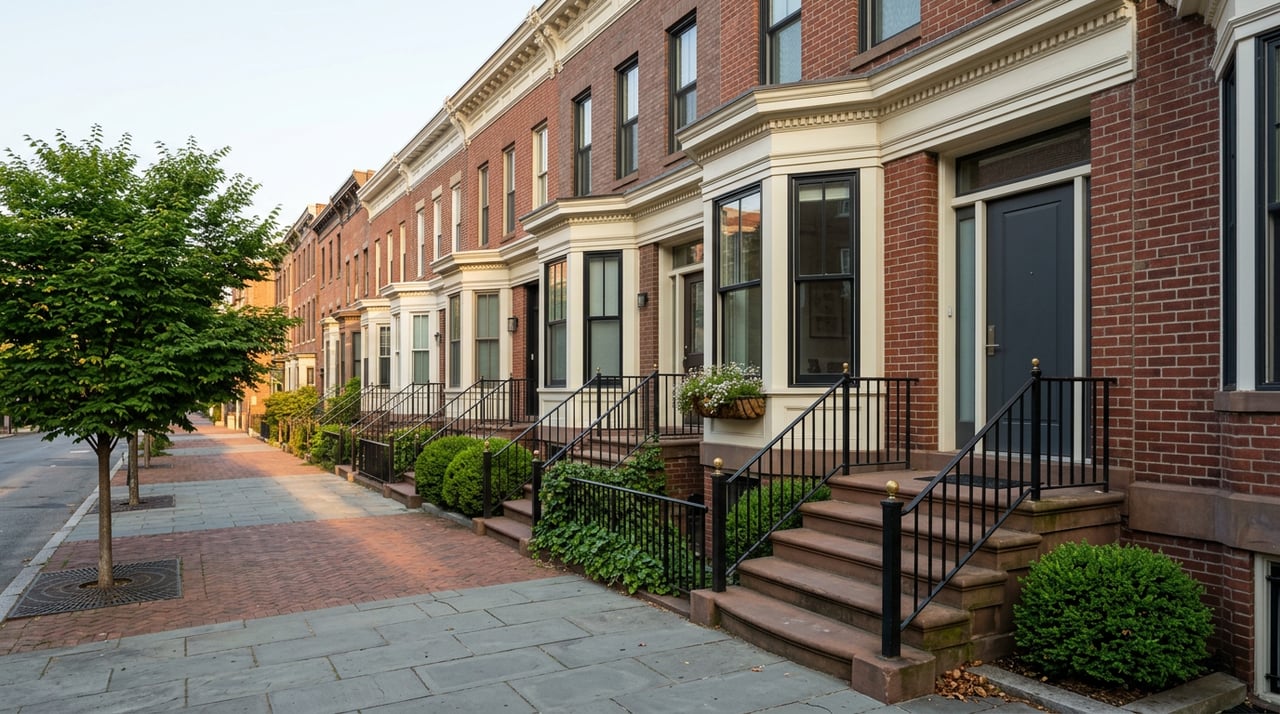
Most of Hoboken's housing stock predates the wood-frame suburban townhouse that the law was written to exclude. The city's residential blocks are built from 19th-century brownstones and Italianate row houses dating to the 1840s through the 1890s, brick walk-ups from the same era converted into condominium associations one floor at a time, and adaptive reuse projects like Wonder Lofts, an 83-unit condo conversion of the 1912 Wonder Bread factory, and the Hudson Tea Building, converted from the old Lipton Tea Warehouse in the late 1990s. Masonry and brick construction dominates. That is exactly the load-bearing profile the law defines as "covered."
Compare that to a garden-variety New Jersey suburb, where new-construction townhouse developments with wood-frame party walls make up a meaningful share of the for-sale condo inventory and fall outside the structural inspection requirement entirely. Hoboken doesn't have that escape hatch built into its inventory. A one-square-mile city with a 19th-century building stock is, structurally speaking, the kind of place this law was aimed at.
| Building type common in Hoboken | Load-bearing material | Covered building? |
|---|---|---|
| Brownstone or row house condo conversion (1840s–1910s) | Brick or stone masonry | Yes |
| Brick walk-up converted to condo association | Masonry | Yes |
| Adaptive reuse loft conversion (factory or warehouse) | Masonry, steel, or hybrid | Yes |
| Waterfront high-rise, post-2000 construction | Concrete or steel | Yes |
| New-construction wood-frame townhouse | Wood frame | No |
That last row is thin in Hoboken. Nearly everything that isn't a detached single-family home falls on the "yes" side of that table.
Here's the part that catches people off guard. The structural inspection deadlines aren't a future date to plan around. For covered buildings that had a certificate of occupancy issued before January 8, 2009, meaning most of Hoboken's brownstone and brick walk-up conversions, the initial structural inspection had to be completed by January 8, 2026. That date is behind us as of this writing.
Buildings with a certificate of occupancy issued after January 8, 2009, mostly the newer waterfront towers, run on a different clock: the first inspection is due within one year of the building's 15th anniversary. A tower that opened in 2010 hits that same January 2026 deadline. A tower that opened in 2015 doesn't need its first inspection until 2031.
The reserve study side has its own deadline that's also already come and gone. Associations that hadn't completed a qualifying reserve study since January 8, 2019 had to secure a new one by January 8, 2025. So if a Hoboken condo association's last study predates 2019 and nothing newer has been filed, the building is currently out of compliance, and that's a fact worth surfacing before a buyer's attorney is three days from closing.
The 85 percent funding option is new enough, dating to August 2025, that most associations are still working out whether to use it. If a board has elected it, the paperwork trail is specific: a bold-font notice to owners, and a mandatory copy to any buyer before the contract is signed. That's not a courtesy disclosure. It's baked into the statute.
For a buyer, this means the reserve study and the funding notice belong on the same list as the condo docs and the master deed, requested at the same time, not chased down during attorney review when the clock is already running. For a seller, it means getting these documents in order before the listing goes live rather than during a fast-moving negotiation. A reserve study for a building with 10 to 75 units typically runs $3,000 to $8,000, and for larger or more complex buildings, $8,000 to $15,000 or more. That's a manageable cost when it's planned for. It's a bad surprise when a buyer's attorney asks for it and the association has to commission one on a deadline.
Condominiums accounted for 50 of Hoboken's 55 closings in August 2026, and the median sold price for the month was $990,000, with 71 percent of closings landing at or above the original list price and a median of 11 days on market. That combination, a market moving fast and a market that is overwhelmingly condo, means this law now touches nearly every Hoboken transaction rather than a narrow slice of it.
A checklist worth handing your attorney or agent before you write an offer:
None of this is a reason to avoid Hoboken's condo market. It's a reason to ask for the right documents in the same breath you ask about square footage.
Does this apply to my two-unit brownstone conversion? If the building's load-bearing structure is masonry, brick, or stone, which describes the overwhelming majority of Hoboken's converted row houses, it counts as a covered building regardless of how few units it has.
What about a newer waterfront tower? It's still a covered building under the law. The inspection timeline is just tied to a later certificate of occupancy date, so the first required inspection may not come due for several more years.
Is this a reason to walk away from a listing? Not on its own. A well-funded association with a current reserve study and a clean inspection report is a sign of a well-run building, and asking for these documents early is simply good practice in a market moving this fast.
Buying or selling a Hoboken condo in this market means moving quickly and knowing exactly which documents to request before the clock starts. MONIQUE BELGRAVE has spent her career inside Hudson County's condo market and can help you build that checklist before you're under contract, not after. Work with Monique.
If you're a first-time buyer seeking guidance, a move up buyer ready for more space, a seller looking to list strategically, an investor focused on returns, or a renter exploring the market, get the insight, strategy, and support you need to move forward with confidence.
Get In Touch With Monique To Learn More
OFFICE 155 6th St, Hoboken, NJ 07030 BROKERAGE 28 Valley Road #1 Montclair, NJ 07042